New England storms hit hard, and the first 48 hours matter. Here's exactly what to do to protect your roof and your claim.
First Steps Right After the Storm
Safety comes first. Stay away from downed power lines, and don't go up on a wet or damaged roof. Once it's safe, walk around your home from the ground and look for obvious damage. Check inside too. Look for water stains, drips, or wet spots on ceilings and in the attic. If water is coming in, move your belongings out of the way and catch drips with buckets. Take plenty of photos and videos of everything you find, inside and out. Date them if you can. This documentation becomes important later for your insurance claim. If you see active leaking or missing sections of roof, call a licensed roofer right away and ask about emergency tarping to stop further water damage.
How to Spot Storm Damage on Your Roof
You don't have to climb up to spot trouble. From the ground or a window, look for missing, torn, or lifted shingles. Hail can leave dents and knock granules loose, which often collect in your gutters. Wind tends to peel shingles back at the edges and corners. Check your gutters and downspouts for dents or sections that have pulled away. Look at the flashing around the chimney and vents for any gaps. Fallen branches or debris on the roof are a clear sign to get it checked. Inside, a new water stain after a storm usually means something let water through. When in doubt, a free professional inspection is the safest way to know how bad the storm damage really is.
Filing an Insurance Claim for Storm Damage
Most homeowners insurance policies cover sudden storm damage, though coverage always depends on your specific policy. Start by reviewing your policy or calling your insurer to report the damage. Give them the photos and notes you gathered. Your insurance company will send an adjuster to inspect the roof and decide what's covered. This is where a roofer helps. We can meet the adjuster on site, point out the storm damage, and provide a detailed repair estimate. Keep in mind that your deductible is set by your policy, and you're responsible for it. No honest contractor can waive it. We can't promise your claim will be approved, but thorough documentation gives it the best chance of a fair review.
Why Emergency Tarping Matters
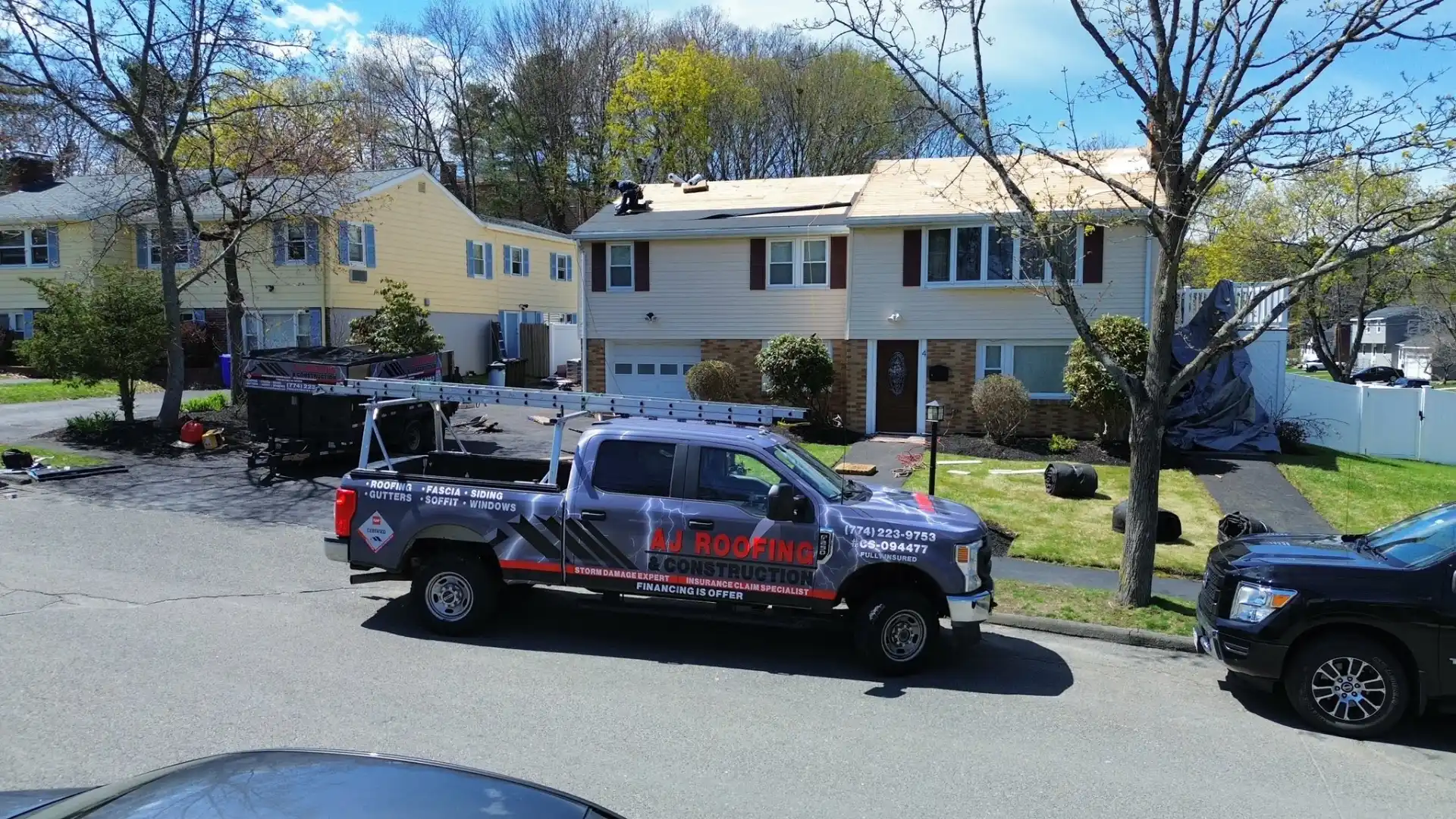
After a storm, a damaged roof keeps letting water in until it's covered. Every hour of rain or melting snow can mean more soaked insulation, ruined drywall, and mold. Emergency tarping is a temporary cover that buys you time. It stops water from pouring in while you wait for the adjuster and the full repair. Skipping this step can actually hurt your claim. Most policies expect you to take reasonable steps to prevent further damage. AJ Roofing Corp offers 24/7 emergency service and emergency tarping across our Massachusetts service area. We get a tarp on fast, then handle the permanent repair once your claim moves forward. Protecting your home early saves you money and stress down the road.